Saturday, November 25, 2006

short sighted

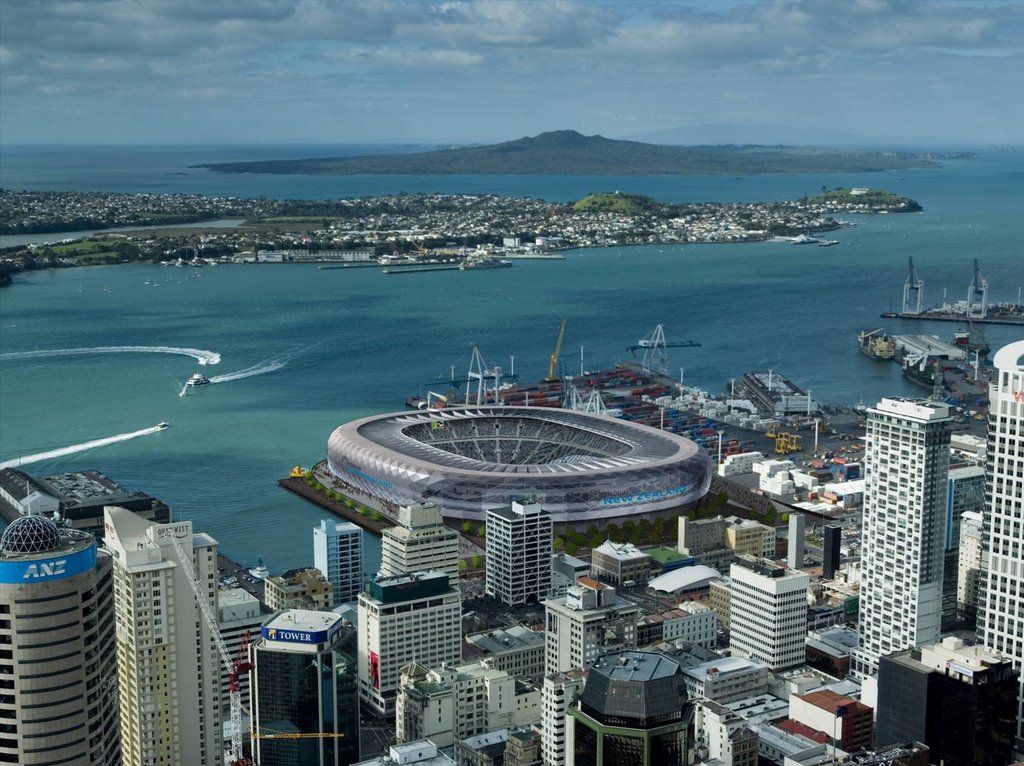
I am a little disappointed in the ARC for dismissing the waterfront stadium as an option. Eden Park is far from the best option as far as I'm concerned, and not worth the $385 million required to get it built. I also don't see a problem in investing a truckload of money the country's largest port - free to the ARC - in making it more space and cost efficient.

I do see a problem in the ARC saying we won't take your money for the Waterfront Stadium, or for investing in the Ports of Auckland, but we sure as hell won't pay for Eden Park either.

the ARC believes that any alternative to the Waterfront Stadium would be a national stadium and should be funded for both capital and operating costs, without reliance on Auckland Regional Council ratepayers.
I agree with the Herald editorial this morning, the 'City council vote should prevail'.

Friday, November 17, 2006

driving with blinkers

In today's Herald, Brian Rudman likens Steve Maharey - and the government - to George W Bush:

Auckland is fast becoming Wellington's Iraq. If we're not stoning Sports Minister Trevor Mallard for his waterfront stadium plan, we're up in arms about Government plans to make us pay tolls to finance highways that the rest of the country gets for free.
Ouch. For one, I'm not not resorting to violence over the waterfront option, and the government isn't yet making anyone pay tolls.

He goes on to claim that:
It's hard, though, to go past the fact that Auckland has long been cheated of its share of transport cash.The proportion has improved in recent years, but in the 2005 financial year, the Auckland region scored only 29 per cent of Land Transport New Zealand funding, although 34 per cent of New Zealanders live in the region.
Why should we have to pay more?
Which isn't really true. Auckland's transport spent was woeful in the 1990's, but so was everyone else's. But we haven't been cheated of dosh from the public kitty. Brian's statistical claims have several problems.

Firstly, Land Transport New Zealand are the people who do the road safety commercials, run our licensing and other peripheral matters. They have nothing to do with road funding.

Secondly, the statistics that Brian is referring to are these ones [PDF], which refer to total road funding, including Transit (the people who build and maintain roads) and Land Transport NZ.

They reveal that:
- Auckland has the highest spend per km of road ($1410 per km, versus 2nd place Wellington at $521 per km)
- Auckland has the 4th highest spend per capita, with the Waikato, Southland and Northland ahead.
- When excluding costs not allocated to any region, Auckland gets 33.6% of the funding versus 32% of population and a contribution of 31.6% to GDP.
- Including costs not allocated to any region(inc. paper pushing in Wellington, TV ads etc), Auckland has a 29% share of transport funding. The 2005 figures indicate that Auckalnd had a $245m spend on highways, and another $941m spend on highways that hadn't been allocated to any region. I suspect that a significant amount of that money went to Auckland and more still into work on SH1 in and out of Auckland.

Thursday, November 16, 2006

over shining sea

So, Tauranga MP Bob Clarkson has decided that the waterfront stadium will cost $1.8 billion dollars. He bases his estimate on his dabbling with stadia building in Tauranga, where according do the Stuff

"The only MP to have experience in building a stadium ... (a) >20,000-seater which came in $1 million over budget at a cost of $21 million."
Gee, wish I could do that with my salary. I also seem to remember another National MP having something to do with, oh, this building, which with some squinting and a vivid imagination kinda looks like a stadium.

Using Stadium NZ as a shining example of NZ's clean green image would also be great. Might even get the greens in behind it. In fact, the more I think about it the few million dollars it'd cost to make the stadium carbon/emissions positive is well worth it - so long as it stays as good looking as this.

And RB is right - the couple that moved in next to a container port and now are complaining about their view possibly going. It's a bit rich to claim that 25000 people will have their views of the harbour blocked by the stadium. I'd be surprised if the number is larger than 100.

It's now time for our say, though. You can tell Mike, Dick and Trevor what you think here. I think the waterfront is the best option, and really hoping Auckland does too.

stadium new zealand images

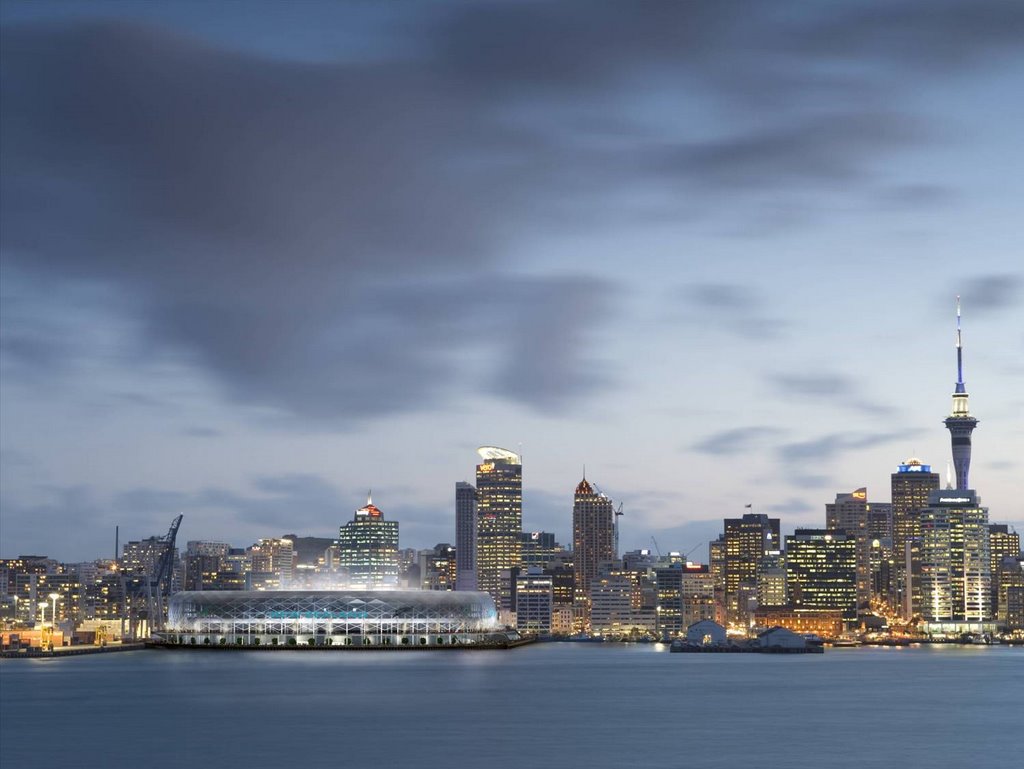
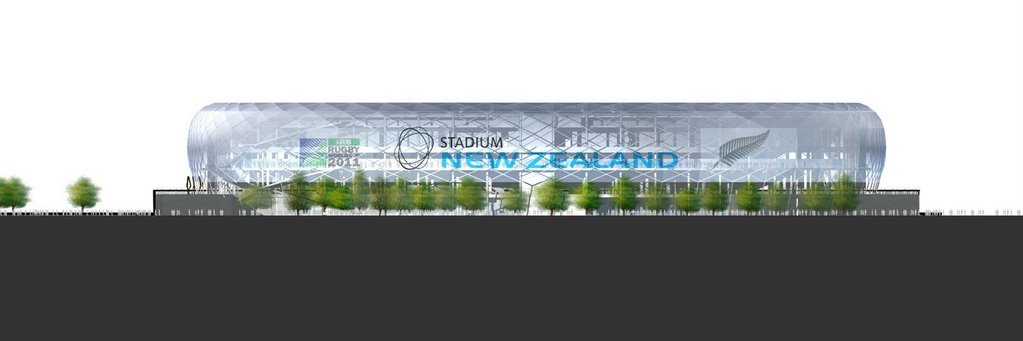
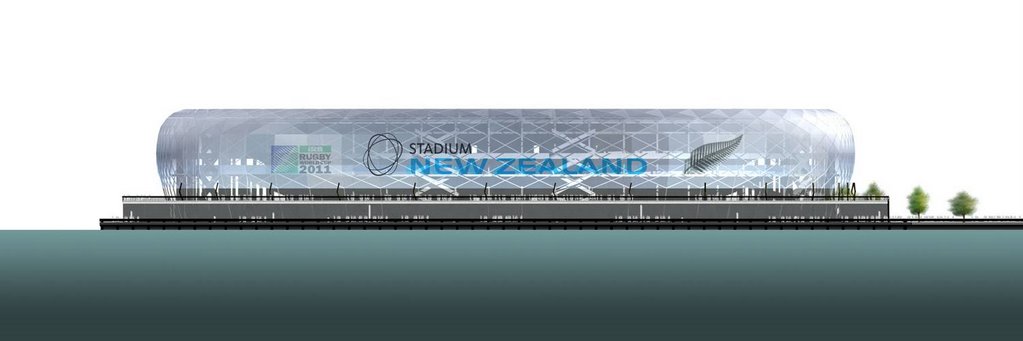
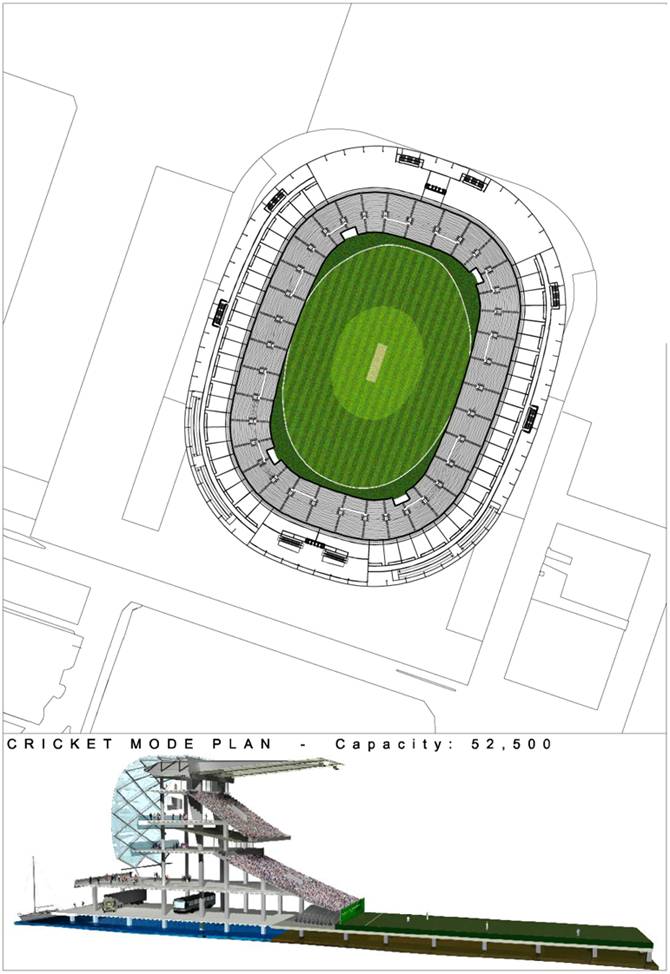
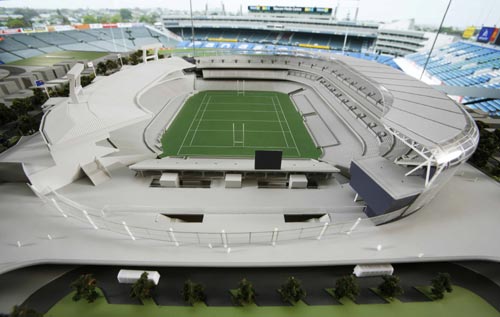
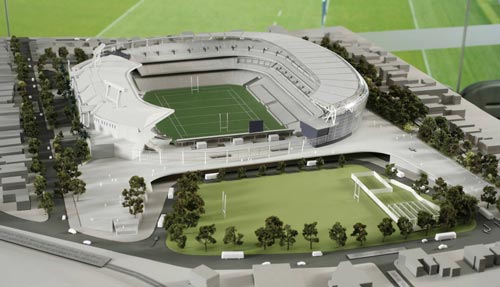
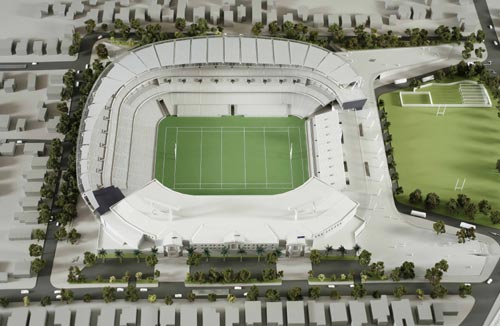
Images from architecture firm Warren and Mahoney for the proposed stadium on the waterfront. I had a bit of trouble downloading images from here, so have posted them for all to drool/lament over.

City View:


Harbour View Day:


Harbour View Night


City Elevation:


Harbour Elevation:


Level 2 View:


Rugby Configuration:


Cricket Configuration:


Concert Configuration:

Monday, November 13, 2006

get it done

The people of Auckland have been given two choices, and only two choices, for the location of the stadium that will host the final of the Rugby World cup. And what do we do?

We complain.

City councillors complain they don't get Carlaw Park as an option, Kerre Woodham complains about it not being sorted earlier, Brian Rudman complains, and complains, and complains.

Can we please start looking at what we actually want, and how it can be done, rather than niggle over the technicalities of it all. If we complain any longer, we'll only have ourselves to blame when it goes belly up.

While I would have supported Carlaw Park, it's not going to fly. My bet is now on the waterfront. It's a far superior option to an Eden Park upgrade, and - as Tim Watkins asserts, it's doable. To all the naysayers, I say this:
- The port will cope without the space AND we have Tauranga to help out as well.
- It'll be 20 years before something interesting is done with the waterfront if this doesn't go ahead.
- So what, it blocks the view to the water. You can't see the water now, we will be able to walk around the stadium to see the water (can't do that now), and it'll block the view of the port as an added bonus.

So, can we have a decision please?

Monday, November 06, 2006

on the wharf

Cabinet today deferred making a decision about the location of Auckland's new stadium, but we should have some goodies by Friday including, according to 3 News, designs from the architects Warren and Mahoney. It looks likely it'll be the waterfront option.

3 News has a roundup here.

I'm keen to see the designs - partly because I agree that the design in media circulation looks like a bedpan - partly because I want to see what the architects think the surrounds will look like. I want more to see boldness, creativity, detail and justification for the design. But above all, I want to see options. If this is truly to be a national stadium, the best minds all need to be working to think of concepts for the stadium. Some will be uninspiring, some will be over the top, but there'll be gems to find if we let NZ's architects loose on designing our stadium.

We can but hope...

Thursday, October 26, 2006

under the mountain, over the water

It's game on - so to speak - in the race to decide where to play the final match of the 2011 Rugby World Cup. In the pursuit of a single game of rugby - albeit a very important game - the government charmed the pants off the IRB, promising to rebuild Eden Park to bring it up to scratch for the final. Out of the woodwork though, new proposals for stadia have springed up, variously hailing their location as superior to leafy Mt Eden.

Left now in the hands of whatever politician wants to pay for it, the cards are on the table. But with no formal public consultation process on what we think it the best option for the stadium, no place to vent our praise or frustration at whats on offer, who knows what we'll end up with. Maybe the majority of Aucklanders want a mutli-billion dollar stadium floating off the shores of Remuera, and are prepared to pay for it, but nobody would know because they haven't properly asked anyone.

For now, you'll have to do with my efforts to bring together the various options.

Eden Park Upgrade
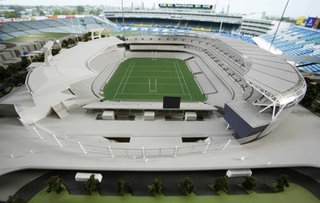
Envisioned for the current site of Eden Park is a $320 million upgrade of the park, including new stands to take a total of 60,000 people, 38000 of whom can enjoy their favourite sport undercover. The plan will enhance the facility for patrons and neighbours alike - with areas for people to stuff around before and after the game, linking the park with Kingsland railway station before and after the game. Plus the new stands will do a better job of containing light and noise spill (if only they could keep the helicopter quiet as it circles the park). Not to mention a pretty entrance from Sandringham Road



Cost:
$320 million
Pros: Cheap(!), does the job, improves existing site, railway station adjacent.
Cons: Not 'visionary', very little parking, poor motorway access, seats not very close to stadium, no roof, limited amount of fixtures per year, suburban area.

Pictures: Eden Park Website.

Bledisloe Wharf / Tank Farm
No pretty designs yet, but the stadium by the water idea has captivated the government as worth of consideration. Potentially the crowning jewel on Auckland's waterfront, the design will be a very hot issue, lest it turn out to look like Wellington's Cake Tin. Sydney hit a winner with their Opera House, so there is no reason for us not to be able to do it. So long as it's not designed by committee. Te Papa was panned as a monstrosity when it opened, but today looking at it (and surrounds), it really is a striking building that seems to feel at home in Wellington.

Either site potentially will provide a bookend to a rejuvenated waterfront area, placing much needed fireworks up the ARC and City Council to get on and turn the area into a place of civic pride. I'm not holding my breath, however.

Being a greenfields development, the stadium can also be whatever we want it to be. We can forget dithering around with boring design constrained by existing facilities and build a stadium with all the bells and whistles that a millionaire city deserves.

Cost: Hopefully less than $1billion.
Pros: Exciting opportunity to do something bloody fantastic for the City, away from suburbia, it can have a roof, host wider variety of events more frequently, close to Brittomart.
Cons: $$$$, getting it done in time.


Carlaw Park
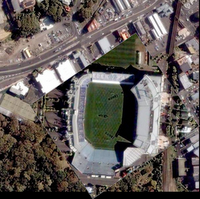
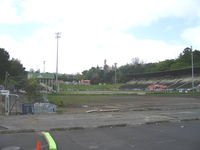
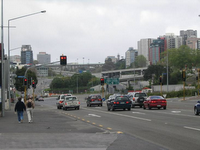
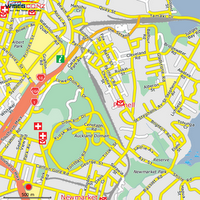
City Councillor Richard Simpson recently corresponded with RB around using the dilapidated Carlaw Park, at the city edge of the Domain, for the stadium. His surprisingly passionate PowerPoint, outlines his vision for the park.

This is my favourite for the stadium, practically being a greenfields site, having the best potential for public transport and greater use as a multi site venue.

As Cr. Simpson points out, if it's covered the Carlaw Park option can serve as a wet weather alternative for activities in the Domain.

I'd go further and insist that if we were to build a stadium here, it'd have to be covered - partly because if we don't cover the next stadium we build, Auckland will never have a covered stadium of it's size, partly because it rains all the time here and partly because Parnell residents are close by, and having this as a concert venue would rock.

And carparks... lots of lovely carparks to use when vising the Domain, Parnell and the University. Carlaw park has this over most of the other locations around - it and it's facilities will be used 7 days a week by Aucklanders of all persuasions. Eden Park wont.

Cost:
???, possibly up to $1b
Pros: Great use of crappy area, close to SH16 and railway network, close to CBD
Cons: $$$$, getting it done in time.


Images: Cr. Richard Simpson & wises (via Public Address)

Stadium Over Water
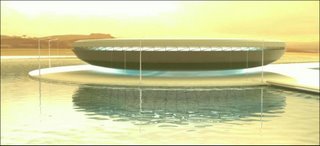
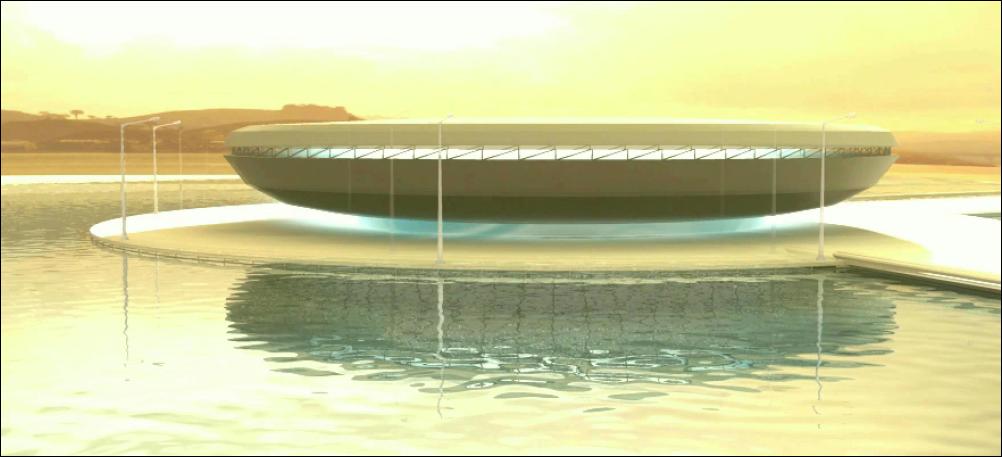
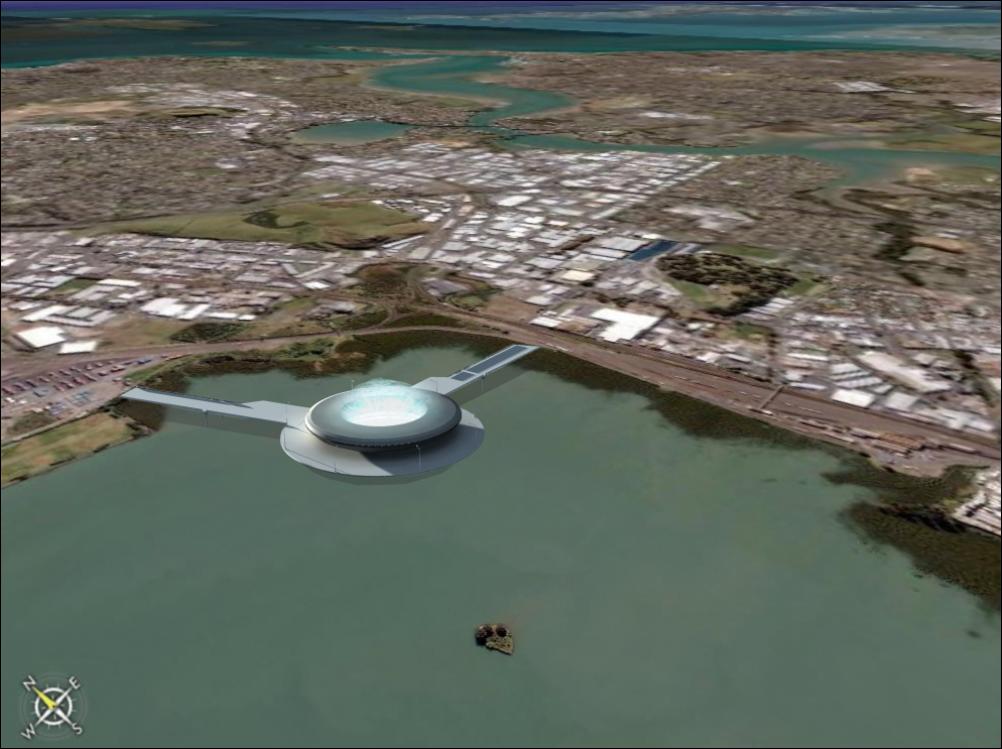
This has to be the most visionary of proposals yet. It has style, it has viable public transport options, it has longevity, and it has oodles of space. The elegant design of the stadium really is something we can admire, and can admire in 50 or 100 years. Even if this isn't the site, the architects who came up with the plan must be the architects to design the new stadium.

Peter Bossley and Bary Copeland - the pair behind the plan - are touting their proposal as a National Stadium, and setting their sights high to match.

If I didn't have a fondness for Central Auckland, this would definitely be my favourite.
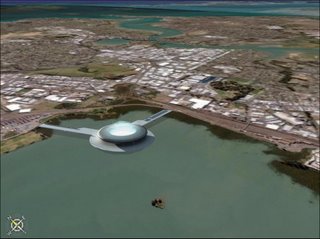


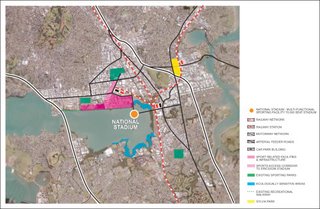
They key advantages, according to the pair are:

- The site over water is a “blank canvas.” ... does not have to be purchased, existing facilities demolished, or the impact considered on surrounding buildings;

- It is close to a major transport corridor, with easy access to rail, motorways and Auckland International Airport;


- It is close to one of the fastest growing regions in Auckland: Counties and Manakau

- The close proximity to major transport connections and the relative lack of site restrictions will assist with the intended completion of the purpose-designed world class stadium in time for the Rugby World Cup in 2011.
They also put their case forward in the Herald, outlting the practical features of the stadium, as well as the asthtetic
Sunlight reflecting off the sea would animate the sloping sides of the bowl, making it an object of great beauty and lightness. Artificial lighting would make it a dramatic object appearing to float over the water.


Cost: ???
Pros:
Visionary, close to SH1 and railway network, potential to grow despt onclick="BLOG_clickHandler(this)" class="blsp-spelling-error" id="SPELLING_ERROR_44">ressed are
a, leaves waterfront free for other things
Cons: $$$$, away from city, tsunami prone.
Images: (via Scoop)

North Harbour Stadium
Mostly called for by reistdents north of the bridge, no serious proposal has been put forward so far. Some reports however, mark this as very cheap.

Cost:
$200-250m.
Pros: Lots of space for development, less residents, motorway adjacent.
Cons: Too far from Manakau city, no rail access, traffic nightmarish already, plans to expand commerical and residential development in area, sports teams with North Harbour as home ground tend to loose a lot.

Mt Smart
Again, has no serious push behind it. Shares most of the cons of Mt Eden and North Harbour, without taking too many of the pros. Current stadium is mega ugly, so could do with a facelift though

Avondale Racetrack
Ditto, plus they have those horrible spiders.

Victoria Park
Or, we could sober up and not.

As we wait for the Government to make up it's mind, we'll just have to twiddle our thumbs and hope they come up with something good.

Monday, October 09, 2006

aect

Handing my cheque to the teller last weekend made me reflect on the good things about living in central Auckland. In particular,

  • There are banks that open on Sundays
  • Once a year, the people who run the company that takes my money year round gives some of it back.
And the teller got to add to her growing pile my cheque from the Auckland Energy Consumer's Trust. Well, I'm sure she wasn't that thrilled - it was a big pile, and apparently was even larger the previous weekend. I hope she got one too, and didn't get it stolen.

Also, it's another good reason not to live on the Shore - you don't get a cheque on the Shore. Add that to the list... the roads are laid out in an incredibly stupid way... nobody can drive properly (about as bad as Ponsonby Road drivers) .... peak traffic in Albany South...

I quite like the AECT/Vector model. It's public ownership of a key asset without the political landmines that SOEs can bring, combined with a corporate model that is that maximises the return and value of assets to the owners. This year the trustees of the AECT are up for election.

Matt McCarten writing in the HoS, gives his personal precis of the three candidate blocks. It's unsurprising that he favours the left candidates over the current right wing bloc who sold a quarter of the company. McCarten notes the hypocrisy of those candidates who promised to keep the company in the Trust's hands, before doing the opposite. He predicts that
if the right-wing politicians grab control in this election, it won't be long before Vector assets of nearly $6 billion go on the international auction block. Of course, the corporation that buys Vector then ups the price to a captive customer base to pay off the loan raised to buy it. The new foreign owner makes a bomb, the foreign bank makes a bomb, and the local people pay the bill.
I don't think the decision to sell a quarter of the company was necessarily incorrect - at least from a corporate point of view. Vector is the best placed power company in the country, having the best market helps with that, but also having as your only shareholder a Trust - asking only for a consistent level of profit - has enabled Vector to leverage its revenue to grow. But to grow past a certain point needs money - and the AECT isn't in a position to demand cash from it's beneficiaries. The float helped Vector expand, and that move paid off. The fact that the dividend was significantly larger than what it had been in previous years is testament to that.

However, I don't think more should be sold off. Having more than a quarter of your shares floating in the market is a risk from governance point of view. In fact, I think it folly for the dividend to be so large. The AECT not only has a responsibility to deliver short term dividends to its beneficiaries, but a long term obligation to retain the company in public ownership and grow its profitability over time. Part of that money could have been used to reinvest in the company, in exchange for more shares, or to buy back some of the shares in the market to increase its asset base.

McCarten's article is a must read for everyone in who is eligible to vote for the trustee election - even if you are on the right of the spectrum. I don't think we're going to see another article that summarises what's at stake. Most importantly, everyone who can vote should. You can't whinge if you didn't.

Monday, September 04, 2006

one city to rule them all

There is considerable momentum - apparently - among Aucklanders to merge their local bodies into one Super City, able to rival international wonder cities like Brisbane in stature and forward planning. Brian Rudman (or at least his sub-editor) goes as far as saying that the proposal is so good that nobody will have a bad word to say against it. Well yes, you got some, but not others.

Well, for starter's I'm not keen on Secret Plans being hatched by people I didn't get the chance to vote for, let alone the one who I voted against. Secondly, amalgamation isn't something to dream up and go running to the government in order to make it happen - I want to see options, and I want to vote on it. I'm also keenly suspicious that the four old men who hatched the plot didn't take the time to have a chat to their counterparts in the Rodney, Papakura or Franklin districts, let alone talk to the Auckland Regional Council about their ideas.

I'm confident in predicting that the 4-way tryst had come up with one of two bad plans:

#1: Combining Auckland, North Shore, Manakau and Waitakere Cities and leaving the rest up to themselves. Leaving the 3 small councils out in the cold is silly. Rodney and Papakura won't be districts much longer - leaving two small cities latched upon one very large one will create social and infrastructure deficits that will spark the need for further amalgamation down the track. Pitting SuperAuckland against the Auckland Region will also create political headaches, most likely having the City constantly whinge about not needing the hang on regions and wanting to go on it's own.

#2: Put the whole lot together, the four Cities, three Districts and one Region to create BehemothAuckland, dwarfing any local authority in the land, creating a unique system of government that will rival the power of Parliament. Auckland could demand a greter influence over how the Government spends it's money Which, I'm sure National supporters will think a good idea now - but they'd rue the day that a Labour-run BehemothAuckland pits itself against a National Government especially on issues of social policy. It might be good for Auckland - may possibly reverse Auckland's stunnning voter apathy - , but it won't be good for the country to have a a City-State battling the nation constantly.

But my biggest problem is the argument that Auckland can't move forward with the issues with a fragmented local body structure. Firstly, demanding major upheaval in in government because of an inability to sit around and agree isn't a good enough reason. Secondly, having different voices of leadership serving their community isn't a bad thing. If Dick Hubbard and Mike Lee have different opinions on how to do something, the better off we all are. Do your job, talk to each other and find a way forward.

And certainly don't assume that the best way forward is to amalgamate to quash dissention and make decisions in secret.

Thursday, August 31, 2006

pictures from the picket line

Auckland's Burning has some great pictures (more in other posts too) from the picket line of Progressive Enterprises distribution workers lock out.

Tuesday, August 29, 2006

company blames underpaid workforce for large profit

The sight today at the local Foodtown was one of hundreds of white tickets peppering the aisles reading,

We're sorry your favourite product is out of stock.

Why? According to the full page ad taken by Progressive Enterprises Ltd in today's Herald,
PEL is suspending grocery distribution centre operations indefinitely to ensure the continued supply of grocery products to customers of Foodtown, Woolworths and Countdown supermarkets ... Industrial action at our distribution center's prevents us from supplying our stores with grocery goods via these center's.

Progressive claims that the Union demand for a single agreement for the distribution centre (DC) workers across the Christchurch, Palmerston North and Auckland DC's and an 8% pay rise will bring the multi-billion company to its knees. 500 employees want to be paid the same rate for the same job. 500 out of 18000 NZ employees will make or break this country's food supply.

Progressive's PR offensive continues to say
PEL is seeking urgent mediation to find a fast resolution and to ensure the union demands for less than three per cent of our staff don't threaten the job security of our entire18,000-plus workforce. We are always prepared to negotiate but not until striking staff return to work.
Which is a bit disingenuous. Urgent mediation and negotiation are usually things that happen immediately before strike action is called, not after. Certainly not after suspending staff for taking industrial action, locking out staff, demanding they return to work without changes to their employment conditions.

The union, the National Distribution Workers Union, responded to the newspaper ad with the following:
Progressive rehired the redundant workers on the lower pay (up to $3 less) and conditions (i.e. ending almost all allowances) of the Progressive Shands Rd Supply Chain and ended the Woolworths National Collective Agreement. Workers at Palmerston North retained the pay and allowances of the original national agreement as the company could not find another location for a new distribution centre and therefore could not legally rehire workers on lower
rates.

All this amongst a fantastic corporate (PDF) result for both PEL and its Australian owner Woolworths Australia Limited. The New Zealand operations reported $2.93 billion sales, reported EBIT of $122 million, sales increase of 3.5% in Q3 and 3.8% in Q4. Food inflation was significantly less at 1.5-2%.

The striking workers aren't getting paid at the moment. Donations can be made to the National Distribution Union at the BNZ account 02-0200-0217968-00 with the reference "Lock Out" to give them a hand.

Kiwi Herald also reports on the issue.

out of food

Foodtown Mt Eden had quite bare shelves when I popped in yesterday evening. My immediate thoughts were of slack management, or a high number of sickies. Unfortunately I was wrong.

Progressive Enterprises, the people who bring grocery items to half the country through the Foodtown, Countdown and Woolworth's brands, have locked out their striking distribution workers . Mt Eden store is particularly noticeable, because of it's small storeroom, it requires multiple deliveries of dry goods every day. Other supermarket's will be feeling the pinch soon, as groceries continue to sell and DC's fail to keep up with demand with their union workforce unable to return to work.

The dispute itself is over national pay rates - the union contesting that workers throughout the country should be paid the same for the same job. Prog's, presumably, pays their non-Auckland workers less, because the market pay is less. Working in Auckland is more expensive for two reasons:
- Cost of travel, further to go in most cases.
- Progressive Enterprises prices by region, essentially making Central Auckland the most expensive place to buy groceries in the country.

But that doesn't mean that Palmerston North worker's don't have to travel or buy food.

[Update: I presumed wrong, see next post]

Whatever the result, in the meantime, expect empty supermarket shelves and a PR disaster for Progs.

Tuesday, June 13, 2006

to be in the city

As always, something that went wrong in Auckland was blamed on the RMA, which as the PM points out isn't fair. It's also not fair to place incredibly large power pylons near peoples homes, no matter how rich they are. I live nowhere near South Auckland, but every time I drive along the southern motorway, I see the massive plylons flanking residential houses and - after I'm over the shock of their ugliness - wonder about cancer rates in those areas, and others near pylons and substations. I agree that we need to spend money, but let's not blame the RMA on doing what it was supposed to do - protect the citizens of this country from harm. I'm sure if the government was to decide the quickest and cheapest way to ensure power supply into Auckland's CBD was to plonk 100KV lines through Remuera, those braying over the last few day's wouldn't be happy.

Though all of this, I had the misfortune to both be subject to diving without traffic lights, and a full days work - the power was still on in the North Shore. Relief, however, came when the generators went down at the company that hosts all of our data (that is, public drives and network applications reliant on databases) , there was nothing to do but surf the net, despite DSL being down in parts of the city with power.

Saturday, June 10, 2006

shopping nightmare

I've decided to stay well away from Sylvia Park this weekend - preferring hell to be involved chaos similar to Thursday's opening. Picked up a few stories from people working there on the day, including hair pulling, fisticuffs and people stealing hot deals from other customer's trolleys. And that was all before the $49 TV's sold out 7 minutes after opening the doors. Even more bizarre than Nat MP Maurice Williamson blaming the traffic chaos on Labour, was a very senior Progressive Enterprises (Owner of Foodtown) employee vandalising a display in the front of the Warehouse and having to be calmed down by Warehouse founder Steven Tindall. Foodtown, apparently, wasn't doing very well during the morning in comparison to the Warehouse.

Tuesday, June 06, 2006

developers 'squeal'

Herald reporter Bernard Orsman describing property developers as 'squealing' in an article about the Auckland City Council raising development levies is apt. For a sector that strongly identifies with the right to argue against a form of user pays is an example of their self serving nature and disregard for the consequences of their actions. The council has responsible outlined $280 million of new spending needed as a result of increased development, and is asking developers for $24 million of that, which falls well short of the impact they cause. They should be responsible for a much larger share of the impact they cause. $950 in costs against the sale price of a house/apartment isn't particularly significant. The Greens want to take it further, increasing the levy and providing discount incentives for solar panels and rainwater collection systems.
The developers don't have a leg to stand on. If their developments and future developments are to succeed, they not only bare responsibility for some of the costs, they will benefit from the public investment into infrastructure from an increased standard in living the buyers of their developments will receive.

Monday, June 05, 2006

trouble in the suburbs

I've always regarded Howick and Pakuranga as oddities compared to the rest of Manakau city, given its relative wealth and different ethnic mix. City councilor for Howick Sharon Stewart seems to think so too, along with many of her constituents, pushing for transparency around the rate take from each ward. With the council instituting confusing and bizarre changes to it's revenue gathering, as well as proposing an increase, the citizen's in the east are feeling that they're unfairly propping up other areas of the city community.

They may well be paying more, but any rates breakdown is meaningless without comparison to ward spending breakdowns and civic infrastructure spending figures. Cr Stewart and her supporters on the council need to tread carefully in this area, especially given the Councils desire to boost revenue. City rates must be uniformly applied to all wards, even if some areas pay proportionally more than others for the benefit of all. Equally the city's bureaucracy has to make sure any planned increases are done with full consultation, and without dramatic changes to individual ratepayers.

Sunday, June 04, 2006

sylvia nearly here

On Thursday, Stage 1 Sylvia Park opens to the public. It will be, most likely, the most exciting thing to happen in NZ retail this decade (for retailers at least). While it may be eclipsed in size by future developments, it's scope and location will make it a winner, at least in the long run.

In the lead-up to the grand opening, retailers will be finialising the setup of their store interiors, and the developers will be rushing to complete the internal roads and carparks. With the next stages still under construction, shopping at Sylvia may be a bit of a chore for a while. Expect dust on your car until it's finished.

There's no doubt we'll be spending more and more time in malls, which hopefully won't lead to the death of current suburbs of character. I'd be a shame to wake up one day, suddenly realising that Kingsland has turned into Albany. I'm still looking forward to seeing the doors open at Sylvia.

In related rants, my local supermarket has decided to move all their wines into new fangled fridges. Which is fine, they needed more space for the chilled beer and wine. But they've messed it up completely. Firstly, they're horrible fridges with doors, so I see more fridge than I do wine. Secondly they've laid out the fridges by supplier - judging by the Montana logo, Pernod Ricard (NZ's largest wine supplier) has paid for the fridges.

This is wrong on many levels.
1. I don't shop for wine by supplier. The fact I happen to know who supplies what wine in the NZ marketplace is, frankly, an odd thing for a person to know. I'd imagine most don't. I - and everyone else - shops by the type of grape it was made with. Now I have a hell of a time finding a Sauv Blanc I want.
2. They've profiled sparkling in between the still wines. That's just stupid. Plus, they've given Lindauer prime position, so unless Pernod is going to ignore the Commerce Commission, they have given the best space to a future competitor.
3. The space on the shelf doesn't belong to suppliers, it belongs to me - the customer.

So, grow come balls Foodtown, and give your space back to the customer. And grow up Pernod, you'll sell more if you make it easier for me to shop.

Thursday, June 01, 2006

making auckland more expensive

The Residential Tenancies Act of 2004 doesn't exist. It should. It was going to happen. But it didn't. For whatever reason, the government isn't interested in passing their own laws. Which is why the Auckland Property Investors Association is calling for all landlords to force tenants to foot the entire Metrowater bill. If the Residential Tenancies Bill, introduced in 2001, has been passed this wouldn't happen.

This was made possible by a 2003 ruling allowing landlords to charge for wastewater, along with standard water.

I don't believe that the District Court Ruling was actually good law. Neither was the 1986 act, although legislators of the time couldn't have foreseen the current situation. The case law is on shaky grounds mainly because the legislation specifically enables

water provided to the premises on the basis of metered usage
which, by logic, excludes water leaving the premises on estimated (unmetered) outflow (non-use). But Judge Graham Hubble chose to allow a specific landlord to charge wastewater to his tenant.

The Association isn't being fair either. Despite the 2003 ruling, landlords can't force tenants to pay the whole bill. There are parts of the bill that are clearly the landlords responsibility, namely charges related to pipe maintenance for the Auckland area. While these are charged (erroneously) according to the amount of water used, it's doesn't count as 'water'. Landlords can't force tenants to pay the annual account charge either - although if Metrowater decided to charge separately for meter reading, tenants could be charged for that.

Labour desperately needs to sort this out. It isn't a sexy issue, and it isn't a populist one, but it does affect many people financially in their core constituency, including those on the lowest wages.

Metrowater also needs to sort it's own house out. It can't continue with dubious wastewater meterage, and it can't justify pipe upkeep against m3 used.

[update: it seems that the whole act is up for review, most likely leading to an entire rewrite of the act. An announcement about the review is expect later this year. Which means that tennants are likely to have to put up with three or four more years of harassment by landlords over water rates, that is if Labour wins the next election. Not good enough]

Wednesday, May 17, 2006

buses

For the first time in a very long while, I'm without a car. So, since arriving at work around 6.30 this morning I'd been fretting about how on earth I would get from the North Shore to sunny Mt Eden. The last time I had to do this, I didn't have to worry about motorways and bridges. I didn't have to worry about which bus to take, when and at what stop. Tell you something for nothing: it aint easy. The maxx website, which was called Rideline last time I had a reason to use it, was impossible. Firstly, the ASP server was down for the first hour of trying to sort the damn trip out and when it finally came back up, it became a nightmare. Gone are the many listings to give you an option of times. Gone are the lovely snake diagrams which detail all the stops en route. All there is now are maps with multicoloured lines right over the street names, just in case I dared to pick a different stop than the one suggested. (I'd provide a link, but the ASP is on the brink again.) And then, the bloody cheek - Maxx wanted me to take four busses. I don't think so.

So I gave up on the website (the low-res pdf's of timetables didn't help either, can't see the street names) and rang the telephone line. Who said the internet was useful. For her, I made it easy. "Get me from work to town". Of course, her first suggestion was to take two busses to get across the bridge. I was livid.

In the end, I ignored all the instructions Maxx had given me and, resolute, walked to the nearby shops and - via the supermarket - found a way home.

My hat goes off to all the people who manage to navigate Auckland's busses. If I could, I would walk over the bridge - it's stupid that we can't. It'd be faster than the bus, and much less of a headache. Let's hope it doesn't get worse before it gets better. That is, if they ever finish the dig-a-thon up and down the northern. (speaking of which, would they just hurry up already with Fanshaw St, how hard can it be.)

Monday, May 08, 2006

liquor.shop.co.nz

The liquor market in NZ is hotting up with Progs, Foodies and the Warehouse set to shake up the scene over the next few months. The move by the big two supermarket isn't supprising given international licencing conditions have given their overseas counterparts plenty of profit in the sprit and RTD market.

But we're not going to see a pice war - not unless one of the big two flinches, despite The Mill's opening of Liquor.co stores. Partly because the supermarkets will ignore Liquor.co, and partly because Liquor's parallel import strategy will hamper direct comparative pricing, and keep the the budget brands (inc. The Warehouse) happy with their margins.

(Liquor.co isn't to be confused with liquor.com on Queen St, neither of which have an internet presence...)

Despite what the supermarkets would have you believe, compared to dry grocery lines, liquor has a good margin - and the high value, again compared to Weet-Bix and tinned peaches, high volume nature of the category will keep all the players interested in keeping prices stable.

It's bad enough to them that Kiwis buy well over half of all liquor when it's discounted, when margins are squeezed in favour of volume. They can't afford to push loss leaders year round against each other because neither Progs or Foodies will win. They really have only two options in the market: push smaller players out or let their competitors etch away at their market share. It's going to be a combination of both - probably consolidating into 4 or 5 players with very few independants stadning firm in small towns and licencing trust areas.

Which is why growing the category is the only option for them. Bring on sprits. Bring on the store within a store model. Yes, less players=evil in a lot of cases. But with licencing laws unlikely to relax in New Zealand in the next twenty years, large liquor retailers will continue to go out of their way to keep their licences clean from underage stings (v bad PR).

Big players are easy targets for instectors, they deliver results and publicity to the reality of underage alcohol purchases. Less players=easier targets=more vigilance.

This has got to be good for our binge drinking culture. Normalising the 18+ sale of hard sprits (and bringing it away from dodgy dealers) will create a more mature drinking culture in the country. Just look at how we looked at wine 20 years ago. I'd bet Chardonnay and Sauvignon weren't everyday words, let alone Gewurztraminer and Pinot Gris.

Yes. It's all about the money. But if the police/district and national licencing authrotities hold their nerve (as they did with the Red Sheds) and keep on top of the big players, we could all be better off.